
Every year on the first day of autumn, Falls Prevention Awareness Day offers a timely reminder that one of the most common and consequential risks facing older adults is also one of the most preventable. In 2026, that date falls on Tuesday, September 22, anchoring Falls Prevention Awareness Week, which runs September 21 through 25.
For families in Flower Mound, TX, with an older adult aging at home, this week is a natural moment to take stock of the everyday habits and living spaces that either reduce or increase fall risk.
The good news is that falls are largely preventable. Understanding the scope of the issue is the starting point.
Why fall prevention deserves serious attention
Falls are the leading cause of injury for adults ages 65 and older in the United States. About 1 in 4 older adults reports falling each year, a figure that amounts to more than 14 million people annually.
Fewer than half of those who fall tell their doctor, which means the full picture is almost certainly larger than what gets reported.
Falling once significantly increases the likelihood of falling again. A single fall roughly doubles the risk of a subsequent one, partly because of the physical consequences and partly because of the anxiety and reduced activity that often follow.
Each year, falls result in approximately 3 million emergency department visits among older adults, and about 1 in 10 results in an injury. Hip fractures are among the most consequential outcomes and frequently mark a turning point in an older adult’s independence and overall health trajectory.
These numbers are context for why senior fall prevention tips are worth taking seriously before a fall happens rather than after.
What actually works: Movement and balance training
Of all the fall prevention strategies available to older adults, regular physical activity produces the most consistent and well-documented results. Strength, balance, and coordination all decline with age, but targeted exercise slows that decline and in many cases meaningfully reverses it.
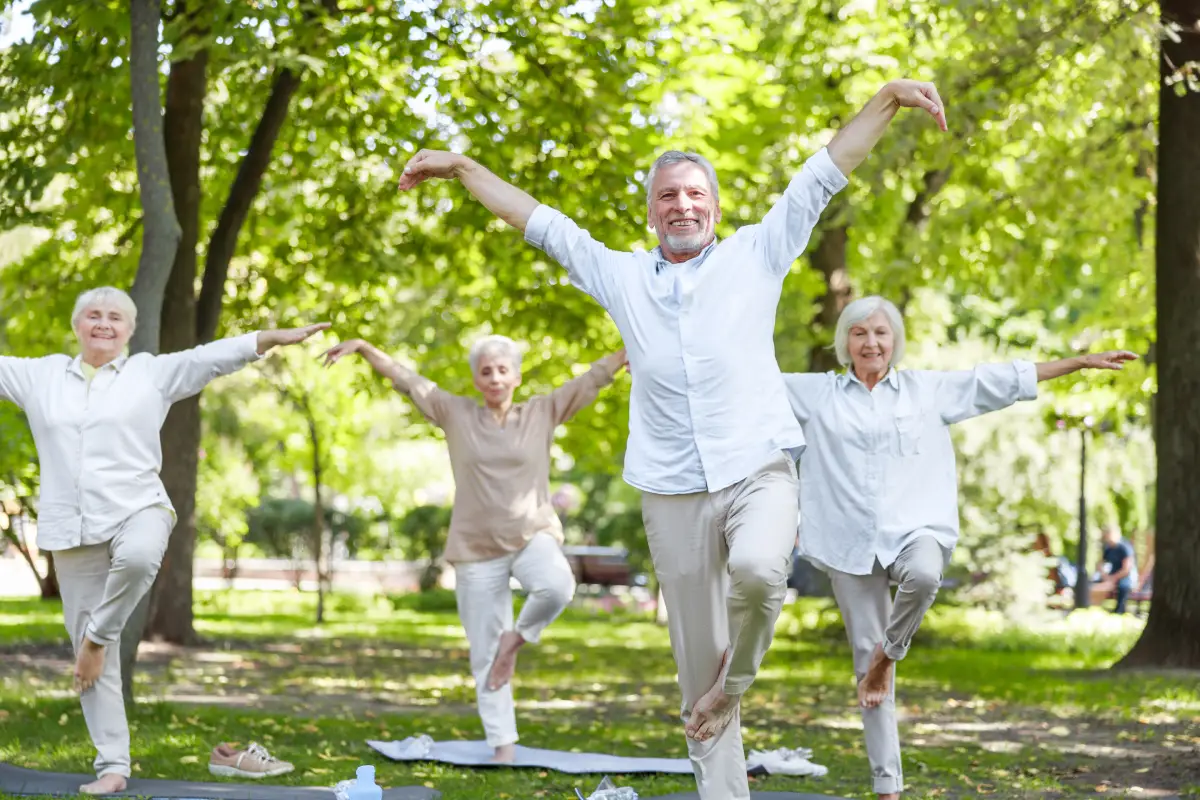
The research on tai chi (tai ji quan) in particular is worth highlighting.
A randomized controlled trial of more than 670 adults aged 70 and older with a history of falls or impaired mobility found that a tai chi program reduced falls by 58% compared with a stretching control group and by 31% compared with a standard multimodal exercise program.
Those are substantial differences produced by a low-impact, accessible activity.
Other forms of movement that support fall prevention exercise goals for seniors include:
- Balance-focused exercises such as standing on one foot, heel-to-toe walking, and side leg raises
- Resistance training targeting the legs, hips, and core, which supports stability during everyday movement
- Low-impact aerobic activity like walking, swimming, or cycling, which maintains cardiovascular health and overall physical function
- Flexibility work, including gentle stretching and yoga, which supports range of motion and reduces stiffness that can affect gait
Consistency matters more than intensity. A daily routine produces more meaningful results over time than an occasional vigorous effort.
How to prevent falling: Making the home work for you
The physical layout of the home plays a significant role in fall risk, and many of the most effective modifications require little more than awareness and a few practical changes.
Common household adjustments that support preventing falls as you age include:
- Removing loose rugs, clutter, and any objects in high-traffic walkways, particularly between the bedroom and bathroom
- Installing grab bars in the shower and near the toilet, and adding a nonslip mat to the tub or shower floor
- Improving lighting throughout the home, especially in stairways, hallways, and the path from the bedroom to the bathroom at night
- Rearranging frequently used items so that reaching overhead or bending low is not regularly required
Footwear deserves mention here as well. Shoes with nonslip soles and good ankle support reduce the risk of slipping indoors and out. Socks worn without shoes on smooth floors are among the most common and easily addressed household hazards.
Two underutilized tools: Hearing and medication review
Two areas of fall prevention tend to receive less attention than exercise and home modification, despite solid evidence supporting both.
Research has found that older adults with hearing loss are nearly three times as likely to fall compared to those without it. However, wearing a hearing aid reduces fall risk by about half.
Hearing contributes to spatial awareness and balance in ways that aren’t always obvious, and addressing hearing loss appears to offer benefits that extend well beyond communication.
Medication review is one of the most underutilized fall prevention strategies available to older adults. Research shows that while most healthcare providers identify medication management as a fall prevention tool, only about 1 in 4 older adults recognizes it as such.
Certain medications and combinations can affect balance, blood pressure, and reaction time in ways that increase fall risk. A conversation with a physician or pharmacist about the current medication list is a straightforward step that many families overlook.
For those wondering how to prevent falls in elderly family members, it sometimes comes down to these quieter, less obvious factors rather than dramatic interventions.
Senior living communities make many of them easier to address by design. Trained team members manage medications daily, and physical programming is built into the weekly schedule rather than left to individual initiative.
How Sodalis Flower Mound supports an active, well-supported daily life
Sodalis Flower Mound offers assisted living and respite care for families across Denton County. Our community is not a fall prevention program, but the way daily life is structured here addresses many of the factors that contribute to fall risk in older adults aging at home.
Residents do not have to think about loose rugs, poor lighting, or whether the bathroom has a grab bar. We design the physical layout with older adults in mind from the start.
What that looks like in practice for residents at our community:
- Structured movement programming that supports strength, balance, and coordination throughout the week
- A team that manages medications daily, reducing the risk of interactions or dosing patterns that affect balance and alertness
- Apartments and community spaces maintained to minimize common household hazards, with appropriate fixtures and lighting throughout
- Respite stays for families who want temporary support for a loved one while evaluating longer-term options
For Flower Mound families whose primary concern right now is keeping a loved one active and well at home, the practical fall prevention steps covered in this blog are a meaningful place to start. If you’re starting to wonder whether the current arrangement is sustainable, a visit to our community is worth adding to the conversation.